
Light Adjustable Lens in NYC
The RxSight Light Adjustable Lens (LAL) is an intraocular lens whose prescription can be refined after cataract surgery. Once the eye has healed enough for reliable measurements, controlled light treatments adjust the lens power. Final treatments then lock in that prescription.
At NY LASIK, Dr. Leonard Bley can discuss whether an adjustable lens fits your eyes, visual goals and ability to attend the required follow-up visits.

What makes an adjustable lens different?
A conventional IOL has a fixed power selected before surgery. With the LAL, postoperative measurements help guide additional refinement. This does not remove the need for careful preoperative testing or guarantee a particular outcome.
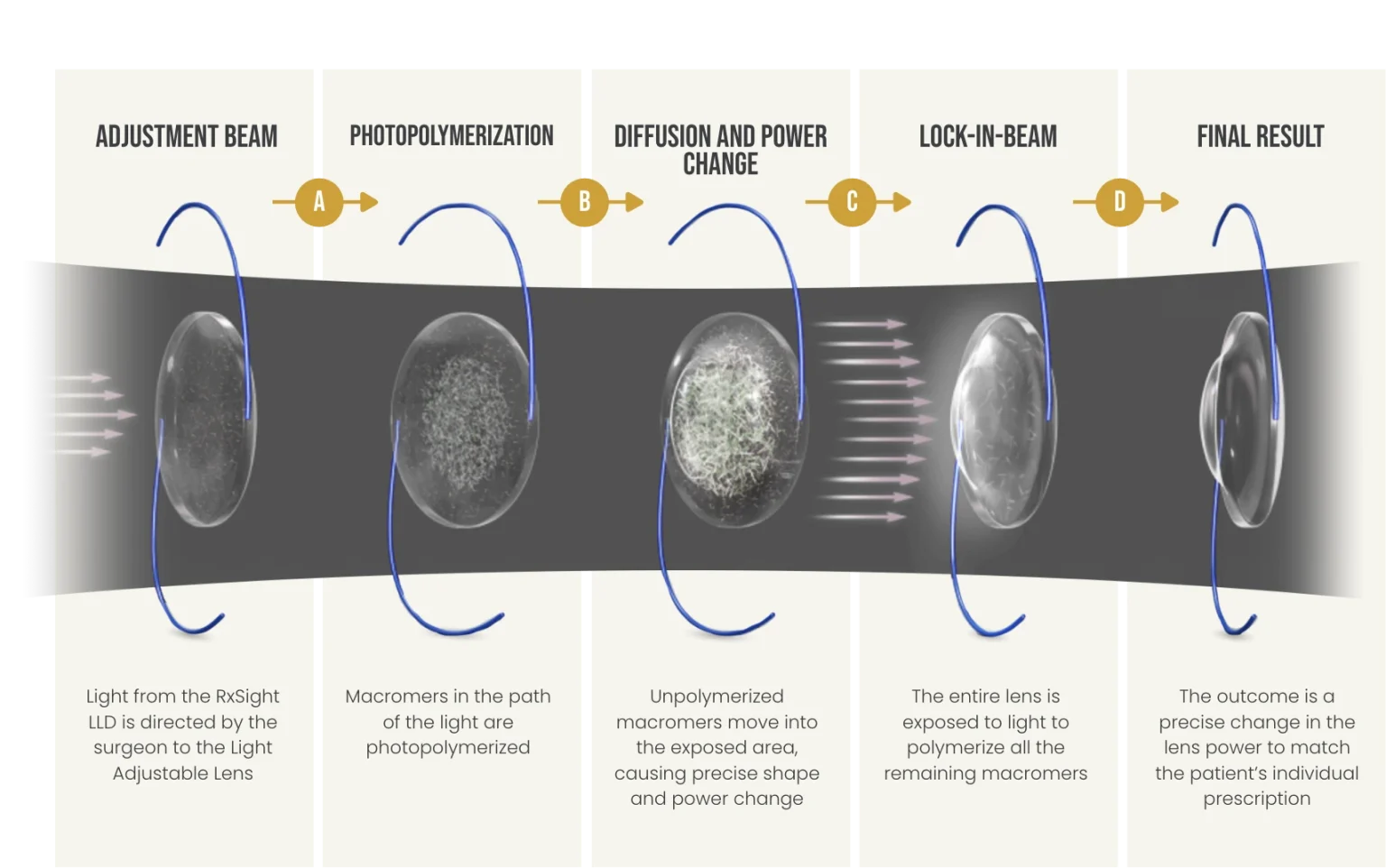
Your treatment includes more than surgery
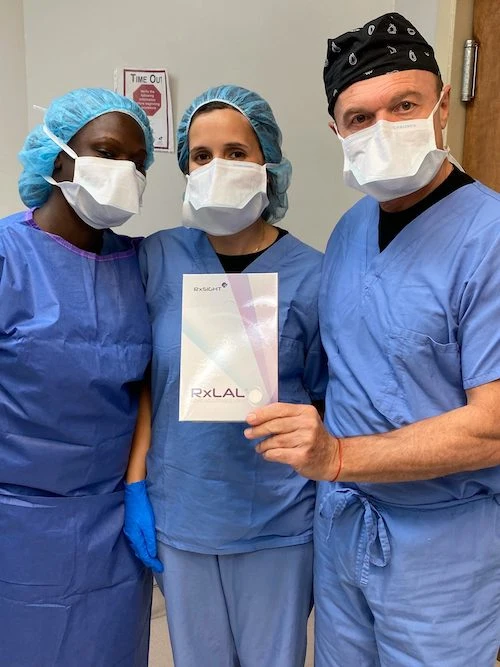
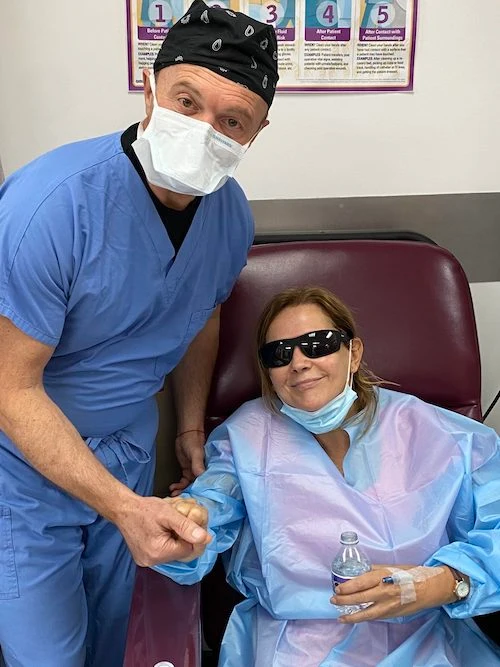
Discuss the complete schedule before choosing an adjustable lens. You will need time for healing, measurements, adjustment visits and final lock-in treatments. Ask how travel, work and transportation should be planned around those appointments.
1. Implantation and healing
The cataract is removed and the LAL is implanted. Use the drops and protective eyewear specified by your surgical team. The first adjustment is scheduled according to healing and measurement stability, not simply how clear your vision feels.
2. Prescription adjustments
RxSight describes a typical course of one to three adjustments followed by final lock-in treatments. Your team determines the appropriate course. Tell the clinician what you notice while reading, using a screen and looking into the distance.
3. Lock-in and protection
The final light treatments stabilize the chosen power. Wear the RxSight-specified UV-protective glasses during waking hours, indoors and outdoors, until 24 hours after the final lock-in, following your team’s instructions. Ordinary sunglasses are not a substitute.

Who may be a candidate?
Candidacy depends on a full examination, the condition of the retina and cornea, the ability to complete light treatments and your medical history. Tell the surgeon about all medications, UV sensitivity, previous herpes eye infection and conditions that affect steady fixation. Do not stop a prescribed medicine without instructions from the clinician who manages it.
The FDA indication concerns cataract removal. If you are considering refractive lens exchange before a visually significant cataract, ask your surgeon to explain the proposed lens’s indication, alternatives and any off-label use.
What about previous LASIK or PRK?
Prior corneal surgery affects planning and measurements. Postoperative adjustment may be relevant, but it does not make every previously treated eye suitable. Read about cataract surgery after LASIK or PRK and bring earlier records when available.
Benefits and limitations to discuss
Adjustment offers an opportunity to refine the prescription after healing. Glasses can still be needed, and no lens restores a young natural lens’s focusing ability. If monovision is proposed, discuss the balance between near tasks, depth perception and night driving.
LAL implantation carries the risks of lens surgery, including infection, inflammation, pressure changes, retinal complications and vision loss. Light treatment also has device-specific risks, including unwanted prescription changes and visual or color disturbances. Review the full patient information with your surgeon.
Can I skip an adjustment appointment?
Completing the prescribed adjustment and lock-in plan is part of treatment. Contact the office to resolve scheduling problems; do not independently stop wearing the protective glasses.
What if my protective glasses break or I forget them?
Contact the surgical team promptly for instructions. Tell them about any unprotected UV exposure rather than waiting for the next scheduled visit.
How do I compare LAL with other lenses?
Start with your visual priorities and eye health. Compare premium lens approaches and our EDOF and multifocal night-vision guide. Bring your questions to a NY LASIK evaluation.
Sources: RxSight patient information, adjustment and eyewear FAQs, and FDA safety and effectiveness summary. Your surgical team’s individual instructions govern treatment and recovery.