
Cataract Surgery
Clear vision matters in every corner of New York City, whether you are reading subway maps in Midtown, navigating the Brooklyn Bridge at dusk, or catching a show at Lincoln Center. If blurry vision, nighttime glare, or fading colors are disrupting your daily life, cataracts may be the cause. NY LASIK offers advanced cataract surgery at convenient locations in Manhattan and Brooklyn, combining precision laser technology with the personalized care New Yorkers deserve.
Our practice is led by Dr. Leonard Bley, a board-certified ophthalmologist and Fellow of the American College of Surgeons (FACS) with more than 30 years of experience performing cataract and laser vision correction procedures throughout New York City. Our team has completed thousands of successful surgeries, and we are committed to delivering exceptional outcomes for every patient.

- What Is a Cataract?
- How Common Are Cataracts?
- Symptoms of Cataracts
- Risk Factors for Cataracts
- How Are Cataracts Diagnosed?
- How Are Cataracts Treated?
- Types of Cataract Surgery Offered at NY LASIK
- Premium Intraocular Lens (IOL) Options
- What to Expect During Cataract Surgery at NY LASIK
- Risks and Complications
- Cataract Surgery Recovery and Timeline
- Why Choose NY LASIK?
- Insurance and Financing Options
- Frequently Asked Questions
What is a Cataract?
A cataract forms when the eye’s natural crystalline lens becomes clouded by a buildup of proteins. This lens sits just behind the iris and is responsible for focusing light onto the retina. As proteins accumulate and clump together over time, the lens gradually shifts from transparent to opaque, allowing less light to pass through. The result is progressively blurred or distorted vision that worsens if left untreated.
Cataracts are distinct from other vision problems because they are structural changes to the lens itself. Prescription glasses or contact lenses cannot correct the cloudiness; only surgical removal of the affected lens restores clarity.

How Common Are Cataracts in the United States?
Cataracts are among the leading causes of vision loss in the United States. Because they develop gradually, many patients are unaware of the condition until vision becomes significantly impaired.
- More than 24 million Americans over age 40 currently have cataracts.1
- Half of all Americans will develop a cataract by the age of 75.2
- The number of Americans living with cataracts is projected to reach nearly 50 million by 2050.3
Annual comprehensive eye exams are the most reliable way to detect cataracts in their early stages, before they interfere with everyday activities.

Symptoms of Cataracts
Cataracts rarely announce themselves all at once. For most New Yorkers, the changes creep in gradually — a taxi’s headlights seem unusually harsh on a rainy night in Midtown, or the fine print on a restaurant menu in Brooklyn requires more light than it used to. Over time, vision may take on a cloudy or washed-out quality, and colors that once appeared vivid can seem yellowed or dull. Some patients notice halos forming around streetlights or traffic signals, while others experience double vision in one eye or find themselves updating their glasses prescription more frequently than usual.4
If you are experiencing any of these symptoms in Manhattan, Brooklyn, or the surrounding New York City area, schedule a comprehensive eye exam at NY LASIK. Early detection allows our surgeons to plan the most effective treatment approach for your specific needs.
Risk Factors for Cataracts
Age is the most significant risk factor for cataracts, but several additional factors can accelerate their formation:
- Cumulative UV exposure from years of unprotected time outdoors
- Tobacco use, including a history of smoking
- Systemic conditions such as Type 2 diabetes or chronic high blood pressure
- Prior eye trauma or a history of intraocular inflammation
- Extended use of corticosteroid medications
- Significant nearsightedness (high myopia)5
Knowing your personal risk factors helps guide decisions about screening frequency and the timing of treatment.
How Are Cataracts Diagnosed?
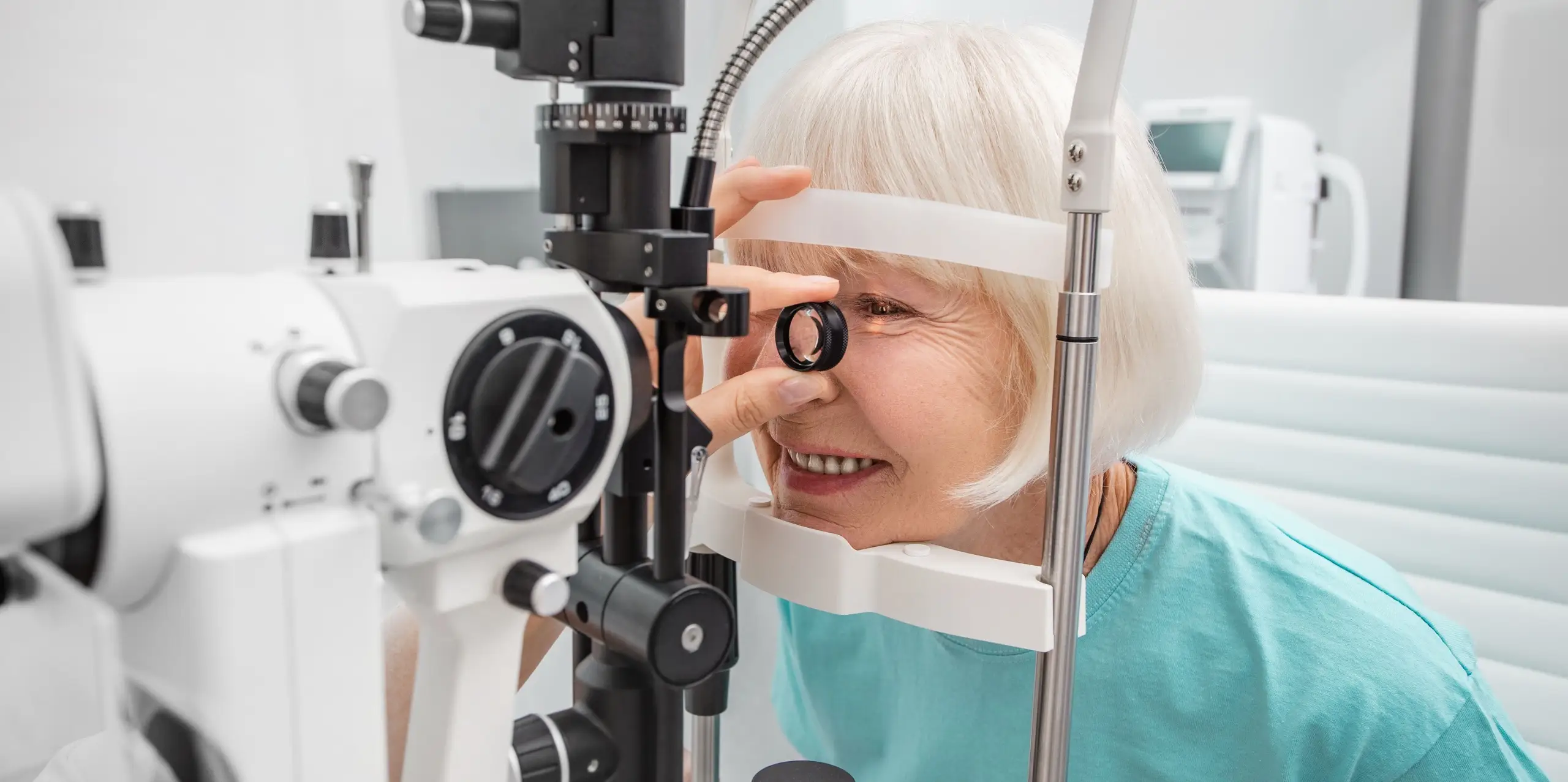
A cataract can only be confirmed through a comprehensive dilated eye exam performed by a qualified ophthalmologist or optometrist. During this exam, your doctor will use a slit-lamp to examine the lens and surrounding structures in detail. Additional diagnostic imaging may be used to measure the eye and plan for lens replacement.
NY LASIK recommends annual eye exams for all adults, and particularly for patients over 60, who face higher risks for cataracts, glaucoma, and retinal disease. Our Manhattan and Brooklyn locations are equipped with advanced diagnostic tools to evaluate your eye health thoroughly and determine your candidacy for surgery.
How Are Cataracts Treated?
Surgery is the only definitive treatment for cataracts. No medication, eye drop, or lifestyle change can reverse lens clouding once it has progressed. Fortunately, cataract surgery is one of the safest and most frequently performed outpatient procedures in the United States, with a success rate exceeding 97% when performed by an experienced surgeon.6
At NY LASIK, we offer two primary surgical approaches, allowing us to tailor treatment to each patient’s anatomy and vision goals.
Types of Cataract Surgery Offered at NY LASIK
Traditional Cataract Surgery (Phacoemulsification)
Our surgeons perform traditional cataract removal using phacoemulsification, a highly refined technique in which a microscopic incision is created in the cornea. Ultrasound energy then breaks the cloudy lens into tiny fragments, which are gently suctioned out. A clear artificial lens, called an intraocular lens (IOL), is then inserted and positioned to restore focusing ability. This self-sealing incision typically requires no stitches and heals quickly.
Laser-Assisted Cataract Surgery (LenSx Femtosecond Laser)
For patients who want an additional level of precision, NY LASIK offers laser-assisted cataract surgery using the LenSx femtosecond laser system. This computer-guided technology performs several of the most critical surgical steps with sub-millimeter accuracy:
- Computer-guided corneal incisions that are more consistent than manual techniques
- Precise circular opening in the lens capsule (capsulotomy)
- Laser fragmentation of the lens, reducing the amount of ultrasound energy required
- Potential for faster recovery and earlier visual clarity
Your world deserves to be seen clearly
“The integration of laser technology has fundamentally changed how we approach vision restoration. By using the femtosecond laser, we can achieve a level of surgical customization that was previously impossible, tailoring every incision to the specific contours of a patient’s eye for superior outcomes”. – Dr. Leonard Bley, NY LASIK
Premium Intraocular Lens (IOL) Options
Selecting the right IOL is one of the most important decisions in your cataract surgery journey. NY LASIK offers a full range of lens technologies, from standard options covered by insurance to advanced premium lenses that may reduce or eliminate dependence on glasses.
Monofocal IOLs
Standard monofocal lenses correct vision at a single focal point, typically set for distance. Patients generally achieve excellent clarity for driving and distance viewing but will continue to use reading glasses for near tasks. These lenses are covered by Medicare and most major insurance plans.
Multifocal and Trifocal IOLs
Advanced multifocal and trifocal lenses are engineered to provide clear vision at multiple distances simultaneously. They are designed to support:
- Distance vision for driving and outdoor activities
- Intermediate vision for computer work and reading dashboards
- Near vision for reading, smartphones, and fine detail work
These premium lenses significantly reduce the need for glasses after surgery and are a popular choice for active New Yorkers who prefer spectacle independence.
Toric IOLs for Astigmatism
Toric lenses are specially shaped to correct astigmatism — an irregular curvature of the cornea — at the same time as the cataract is removed. This eliminates the need to address astigmatism separately and often allows patients to achieve sharp distance vision without glasses.
Light Adjustable Lens™ (LAL)
The Light Adjustable Lens is the only FDA-approved IOL that allows the surgeon to customize and fine-tune visual outcomes after the implant has been placed. Using a series of controlled UV light treatments performed in-office, the lens power is precisely adjusted to match your individual visual needs. This technology is particularly valuable for patients who have had prior refractive surgery such as LASIK or PRK.
Extended Depth of Focus (EDOF) IOLs
EDOF lenses work by elongating the eye’s depth of focus to create a continuous visual range, emphasizing distance and intermediate vision. Compared to some traditional multifocal designs, EDOF lenses typically produce fewer nighttime halos and are well-suited for patients who work extensively at a computer or drive frequently in and around New York City.
What to Expect During Cataract Surgery at NY LASIK
Cataract surgery at NY LASIK is a same-day outpatient procedure that takes approximately 15 to 20 minutes per eye. Here is what to expect from start to finish:
- Anesthesia: Topical numbing drops are applied directly to the eye, eliminating the need for injections or general anesthesia. You remain awake and comfortable throughout.
- Accessing the lens: Your surgeon creates a tiny, self-sealing entry point in the cornea — no stitches required.
- Removing the clouded lens: Using ultrasound or femtosecond laser energy, the deteriorated lens is broken into fragments and gently cleared from the eye.
- Placing your new lens: The IOL you and your surgeon selected is carefully inserted through the same small opening and centered within the lens capsule.
- Same-day discharge: After a brief rest in our recovery area, you are released into the care of a friend or family member. Your first follow-up visit is scheduled for the following day.
Vision improvement is often noticeable within the first day or two after surgery. When both eyes need treatment, the second procedure is typically performed one to two weeks after the first.

Risks and Complications
Cataract surgery carries a complication rate of less than 3% when performed by an experienced surgeon.7 Potential risks include:
- Infection (rare with proper postoperative care)
- Swelling or bleeding of the retina
- Retinal detachment
- Posterior capsule opacification (PCO), also called a secondary cataract
- Lens dislocation8
At NY LASIK, our surgeons conduct thorough preoperative evaluations to identify and minimize individual risk factors. Secondary cataracts, if they develop, can be treated quickly and painlessly with an in-office laser capsulotomy procedure.
Cataract Surgery Recovery and Timeline
Recovery from cataract surgery is generally straightforward. Most NY LASIK patients return to their normal routines within one to two weeks.
Recovery Timeline
- Days 1-3: Rest at home. Use prescribed antibiotic and anti-inflammatory eye drops as directed. Vision may be mildly blurry or sensitive to light initially.
- Week 1: Avoid heavy lifting, strenuous exercise, and bending at the waist. Protect the eye from water and irritants.
- Weeks 2-4: Gradually resume normal activities as vision stabilizes and the eye heals.
- 1 Month: Complete healing is typically achieved. A final vision assessment is performed and, if needed, a glasses prescription is updated.
The vast majority of patients describe the improvement in their vision as dramatic, often reporting that colors are brighter and details are sharper than they had been in years.
Why Choose NY LASIK for Cataract Surgery in New York City?
Choosing the right surgeon is one of the most important steps in your cataract care journey. At NY LASIK, patients across Manhattan and Brooklyn benefit from:
- Board-certified expertise: Our practice is led by Dr. Leonard Bley, who earned his medical degree from New York University Grossman School of Medicine and completed his ophthalmology residency at the NYU Department of Ophthalmology. He is a Fellow of the American College of Surgeons and an active member of the American Academy of Ophthalmology.
- 30 years of New York City experience: Dr. Bley has performed thousands of cataract and laser vision correction procedures for patients across the five boroughs.
- Advanced technology: We offer the LenSx femtosecond laser, the Light Adjustable Lens, and a full range of premium IOL options.
- Convenient NYC locations: Our offices in Manhattan and Brooklyn are accessible from all five boroughs and surrounding areas.
- Personalized care: Every surgical plan is tailored to your anatomy, lifestyle, and vision goals.
Insurance and Financing Options
NY LASIK accepts Medicare and most major insurance plans for medically necessary cataract surgery. Premium IOL upgrades and laser-assisted enhancements involve additional out-of-pocket costs not covered by insurance.
Payment Options
- Cash and major credit cards accepted
- Flexible financing through Alphaeon Credit, including $0 down and 0% interest plans
- Health Savings Accounts (HSA) and Flexible Spending Accounts (FSA) accepted
Our staff is available to help you verify benefits and explore financing options so you can focus on your recovery.
Yes. Patients who have had prior LASIK, PRK, or other refractive surgery can still undergo cataract surgery. NY LASIK uses specialized biometric calculations and the ORA intraoperative aberrometry system to select the ideal IOL power for eyes that have been reshaped by laser vision correction.
Cataract surgery is performed under topical anesthetic eye drops, which numb the eye completely. Most patients report feeling only mild pressure during the procedure, with no significant discomfort. Postoperative soreness, if any, is typically mild and short-lived.
Cataract surgery results are permanent. The artificial IOL does not degrade or cloud over time. Some patients develop a posterior capsule opacity (PCO), sometimes called a secondary cataract, months to years after surgery. This is not a true cataract recurrence but rather a mild cloudiness of the membrane that holds the IOL. It is treated quickly and painlessly with an in-office YAG laser capsulotomy.
Surgery is generally recommended when cataracts begin interfering with daily activities such as reading, driving, or working. If your cataract is affecting your quality of life or safety, it is time to schedule a consultation. Our ophthalmologists will evaluate the severity of your cataract and help you determine the right timing and approach.
Don't let cataracts hold you back
“When cataracts begin interfering with your daily activities, such as reading the fine print on a menu or driving across the Brooklyn Bridge at night, it is time to consider surgery,” explains Dr. Leonard Bley, a board-certified ophthalmologist and founder of NY LASIK. “Modern cataract surgery is highly successful, with success rates exceeding
 Trusted Source
Cataract Surgery
Cleveland Clinic
Go to Source
in experienced hands.”
Trusted Source
Cataract Surgery
Cleveland Clinic
Go to Source
in experienced hands.”
- American Academy of Ophthalmology. Eye Health Statistics. Available: https://www.aao.org/newsroom/eye-health-statistics#. Accessed May 20, 2026.
- American Academy of Ophthalmology. Eye Health Statistics. Available: https://www.aao.org/newsroom/eye-health-statistics#. Accessed May 20, 2026.
- National Eye Institute. Cataract Data and Statistics. Available: https://www.nei.nih.gov/eye-health-information/eye-conditions-and-diseases/cataracts. Accessed May 20, 2026.
- Cleveland Clinic. Cataracts (Age-Related). https://my.clevelandclinic.org/health/diseases/8589-cataracts-age-related. Accessed May 20, 2026.
- Mayo Clinic. Cataracts. https://www.mayoclinic.org/diseases-conditions/cataracts/symptoms-causes/syc-20353790. Accessed May 20, 2026.
- Cleveland Clinic. Cataract Surgery. https://my.clevelandclinic.org/health/treatments/21472-cataract-surgery. Accessed May 20, 2026.
- Cleveland Clinic. Cataract Surgery. https://my.clevelandclinic.org/health/treatments/21472-cataract-surgery. Accessed May 20, 2026.
- American Refractive Surgery Council. Is Cataract Surgery with Vision-Correcting IOLs Safe? https://americanrefractivesurgerycouncil.org/refractive-surgery-procedures/cataract-surgery-with-vision-correcting-iols/is-cataract-surgery-with-vision-correcting-iols-safe. Accessed May 20, 2026.
The content on this page was authored and medically reviewed by Dr. Leonard M. Bley, MD, FACS, founder of NY LASIK and Surgical Director of Laser and Microsurgery Institute. Dr. Bley is an internationally recognized, board-certified refractive and cataract surgeon with over 35 years of clinical experience and more than 30,000 vision correction procedures performed across our Manhattan, Brooklyn, and Queens offices. A Fellow of the American Academy of Ophthalmology and member of the American College of Eye Surgeons, he trained at Manhattan Eye, Ear and Throat Hospital and completed fellowship training at New York University Hospital, with hospital affiliations at NYU Langone and Staten Island University Hospital. By combining decades of surgical expertise with a commitment to evidence-based, patient-centered care, our team ensures all content on this site reflects the most current and accurate information in refractive surgery, cataract care, and advanced eye health.