
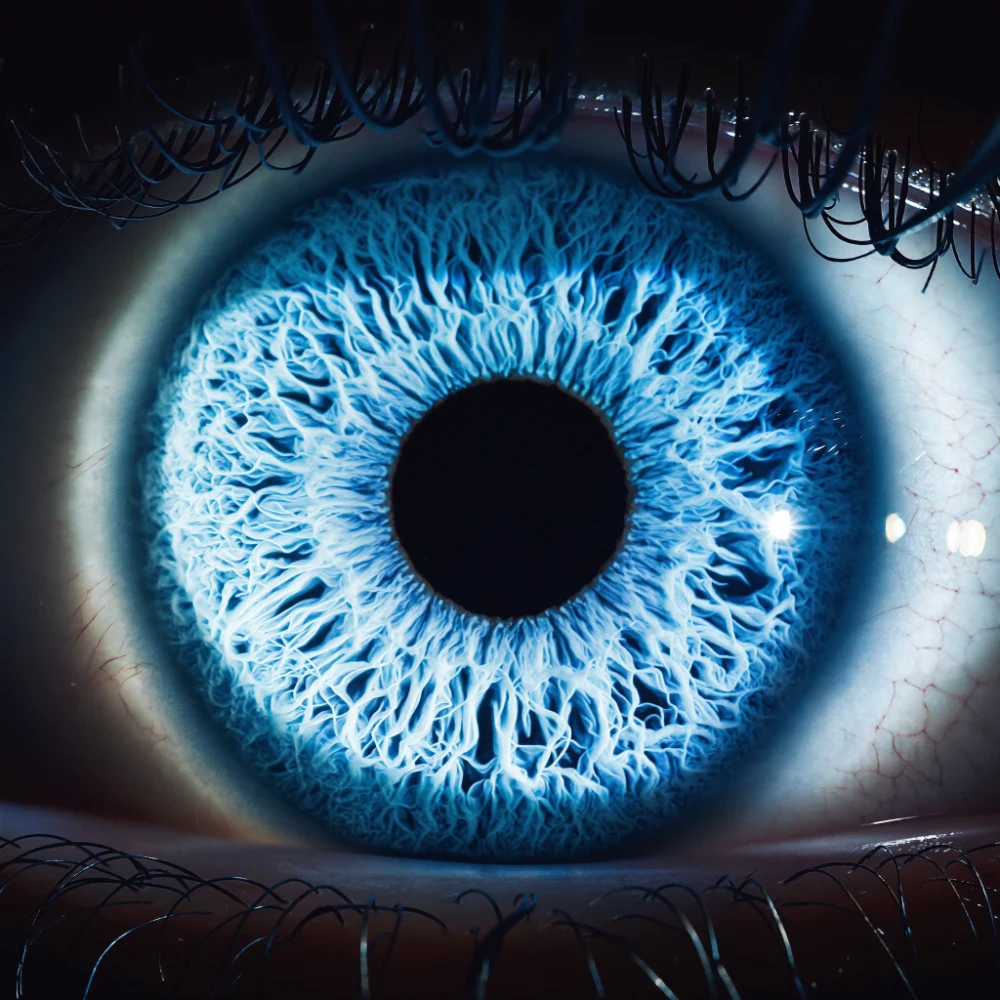
Topography-guided laser vision correction
Contoura® Vision LASIK in NYC
Contoura builds your treatment from up to 88,000 corneal data points — not just your glasses prescription. Performed by Dr. Leonard Bley in Manhattan, Brooklyn and Queens.
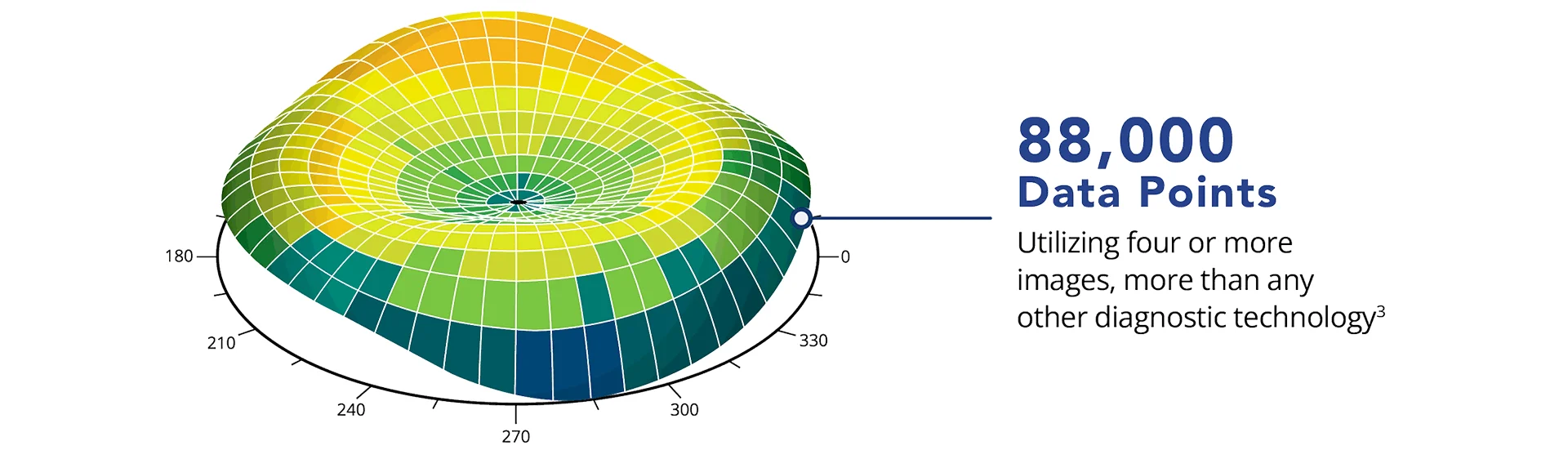
Contoura® Vision is topography-guided LASIK. Before surgery, a WaveLight Topolyzer VARIO maps 22,000 elevation points across your cornea in a single scan, and Contoura treatment planning combines four or more scans — up to 88,000 data points. The laser treatment is then built from that map, so it corrects the irregularities specific to your eye in addition to your nearsightedness and astigmatism. NY LASIK performs Contoura at its Manhattan, Brooklyn and Queens offices.
What is Contoura Vision?
Standard LASIK corrects the prescription written on your glasses: how nearsighted you are, and how much astigmatism you have. That prescription describes your vision, but it does not describe your cornea. Two people with an identical prescription can have very differently shaped corneas.
Contoura Vision starts from the cornea itself. The Topolyzer VARIO uses a Placido disc system of 22 measurement rings to capture 22,000 elevation points across the corneal surface in a single scan, alongside keratometry and pupil measurements. Contoura planning combines four or more of those scans, so the treatment is built from up to 88,000 data points — more than any other diagnostic technology Alcon compares it against. Those measurements are sent directly to the WaveLight® excimer laser, and the ablation is planned around the shape of your eye — smoothing the irregularities in the cornea while correcting the refractive error.
The practical difference is resolution. Wavefront-guided systems, the previous generation of customized LASIK, typically work from a few hundred data points. Contoura works from tens of thousands.
How Contoura differs from standard and wavefront LASIK
| Wavefront-optimized | Wavefront-guided | Contoura® Vision | |
|---|---|---|---|
| What it treats | Your prescription, with a profile that preserves corneal shape | Prescription plus higher-order aberrations of the whole eye | Prescription plus the measured shape of your cornea |
| Data captured | Prescription and corneal curvature | A few hundred wavefront points | Up to 88,000 corneal data points |
| Measurement device | Standard refraction and keratometry | Wavefront aberrometer | WaveLight Topolyzer VARIO |
| Best suited to | Straightforward prescriptions | Eyes with notable internal aberrations | Eyes with corneal irregularity, or anyone seeking the most individualized treatment |
None of these is universally “best.” Which one Dr. Bley recommends depends on what your scans show, and that conversation happens at your evaluation — not before it.
How a Contoura procedure works
From your first scan to driving yourself to a follow-up, most Contoura patients are through the process in a matter of days.
-
Corneal mapping
The Topolyzer VARIO captures multiple topography scans of each eye. Dr. Bley reviews them for consistency and selects the maps used to plan the treatment. This is also where corneal thickness and shape determine whether you are a Contoura candidate at all.
-
Treatment planning
The topography data transfers directly to the WaveLight laser over Alcon’s WaveNet network, which removes the manual data entry step and the transcription errors that come with it. Your treatment profile is built from your own corneal map.
-
The procedure
A femtosecond laser creates the corneal flap — no blade at any stage. The excimer laser then applies the topography-guided ablation, typically in well under a minute per eye. You are awake, numbed with drops, and in the suite for roughly fifteen minutes.
-
Recovery and follow-up
Most patients notice a dramatic improvement within 24 hours and return to work within a day or two. Follow-up visits are scheduled the next day and over the following months, and are included in the Lifetime Assurance Plan.
The platform
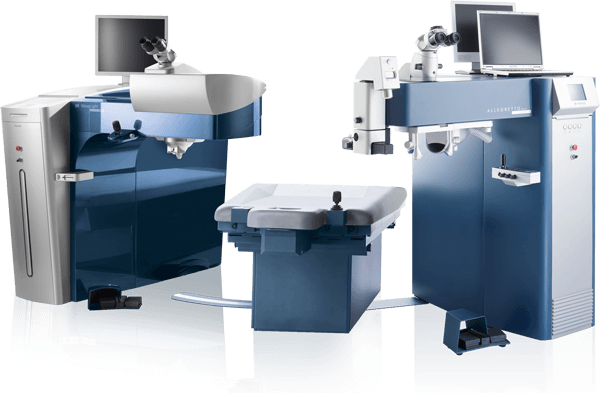
Contoura runs on Alcon’s WaveLight® Refractive Suite. The FS200 femtosecond laser creates the corneal flap, the EX500 excimer laser applies the topography-guided treatment at 500 Hz with high-speed eye tracking, and the Topolyzer VARIO supplies the corneal map that drives both.
Take the two-minute LASIK quiz to see whether you are likely to qualify before you book.
Clinical evidence
What the FDA trials found
Alcon’s clinical trials for topography-guided LASIK, measured twelve months after surgery.
Source: Alcon FDA clinical trial data for topography-guided LASIK, 12 months post-operative. Individual results vary, and these figures describe trial participants rather than a guarantee of your outcome.
Are you a candidate for Contoura in NYC?
Contoura is FDA approved to treat nearsightedness, with or without astigmatism. You are more likely to be a candidate if:
- You are at least 18 and your prescription has been stable for about a year
- You are nearsighted, with or without astigmatism
- Your corneas are thick enough and regular enough on topography
- Your eyes are healthy — no active dry eye, keratoconus, or uncontrolled eye disease
- You are not pregnant or nursing
The honest version: some eyes are not right for LASIK of any kind, and the scan is what tells us. If Contoura is not the answer for you, Dr. Bley performs the alternatives too.
| Procedure | How it works | Often considered when |
|---|---|---|
| Contoura LASIK | Topography-guided reshaping of the cornea under a laser-created flap | Healthy, adequately thick corneas; nearsightedness with or without astigmatism |
| ReLEx® SMILE | A lenticule is removed through a small incision — no corneal flap | You want a flapless option; NY LASIK is the only tri-state center offering both Contoura and SMILE |
| EVO ICL™ | An implantable collamer lens placed inside the eye; no corneal tissue removed | Thin corneas, dry eyes, or moderate-to-severe nearsightedness |
| Refractive Lens Exchange | The natural lens is replaced with a premium intraocular lens | Patients over 45 who also want to address reading vision and future cataract |

Your surgeon
Why patients choose NY LASIK for Contoura
Contoura is a platform, not a practice. What differs between providers is who is planning the treatment and what they stand behind afterward.
Dr. Leonard M. Bley is a board-certified refractive and cataract surgeon with more than 35 years of clinical experience, Surgical Director of the Laser & Microsurgery Institute and founder of NY LASIK. He performed the first Light Adjustable Lens procedure in New York City.
- Only tri-state center offering both Contoura and SMILE
- More than 100,000 procedures performed
- Written 20/20 commitment on Contoura treatments
- Lifetime Assurance Plan for enhancements
- Price match guarantee on comparable technology
- Doctor of Medicine, NYU School of Medicine
What does Contoura Vision cost in NYC?
LASIK in New York City generally runs between $2,000 and $4,000 per eye, and topography-guided treatment sits at the upper end of that range because of the additional diagnostics and the laser platform involved. Your exact price depends on your prescription, your corneal measurements and the procedure you and Dr. Bley decide on.
What NY LASIK does to bring it within reach:
- $1,750 off LASIK on the current offer
- 0% financing for approved applicants, so the balance is spread over monthly payments
- Tax-free HSA and FSA dollars are eligible
- Price match guarantee against a written quote from a comparable provider
Full detail on the cost of LASIK in NYC and on the LASIK Triple Commitment.
Find out what your eyes need
A Contoura evaluation includes the corneal mapping — you will see your own topography before you decide anything.
Serving all five boroughs
Where we perform Contoura Vision
Three offices across New York City, with the Contoura laser suite in Manhattan.

Manhattan
160 E 56th Street, #900New York, NY 10022(212) 758-3838Our Midtown East office, minutes from Lexington Avenue and the 4/5/6 and E/M lines. Serving the Upper East Side, Midtown, Murray Hill, Chelsea and the Village.

Brooklyn
1301 Avenue JBrooklyn, NY 11230(718) 627-0303In Midwood on Avenue J, convenient to Flatbush, Borough Park, Sheepshead Bay, Park Slope and Bay Ridge. Consultations and follow-up care without crossing the bridge.

Queens
102-30 Queens BoulevardForest Hills, NY 11375(718) 275-7070Forest Hills, close to Rego Park, Elmhurst, Kew Gardens, Jackson Heights and Astoria, with easy access from the Long Island Expressway and the M/R lines.
Contoura Vision FAQ
Questions New Yorkers ask
Is Contoura Vision better than regular LASIK?
Contoura is a more individualized form of LASIK rather than a different operation. It uses up to 88,000 corneal data points to plan the treatment, where standard wavefront-optimized LASIK works from your prescription and basic corneal curvature. In Alcon’s FDA trials, 92.6% of treated eyes reached 20/20 or better at twelve months. Whether it is better for you depends on what your corneal scans show.
How much does Contoura Vision cost in New York City?
LASIK in NYC generally ranges from $2,000 to $4,000 per eye, with topography-guided treatment toward the higher end. NY LASIK currently offers $1,750 off, 0% financing for approved applicants, HSA and FSA eligibility, and a price match guarantee. Your exact price is set at your evaluation.
Does insurance cover Contoura LASIK?
Elective vision correction is generally not covered by medical insurance. Most patients use a combination of financing and pre-tax HSA or FSA dollars. Some vision plans offer a discount — bring your plan details to your consultation and our coordinators will check.
How long does Contoura LASIK take?
You are typically in the laser suite for about fifteen minutes for both eyes, with the actual laser treatment taking well under a minute per eye. Plan on two to three hours at the office on surgery day including preparation and post-op checks, and arrange a ride home.
What is the recovery like?
Most patients see a dramatic improvement within 24 hours and return to desk work within a day or two. Expect drops for several weeks, no eye rubbing, and no swimming or contact sports for a short period. Vision continues to sharpen over the following weeks.
Is Contoura Vision FDA approved?
Yes. Contoura Vision received FDA approval in 2016 for the treatment of nearsightedness, and nearsightedness with astigmatism.
Can I get Contoura if I have astigmatism?
Yes — Contoura is FDA approved for nearsightedness with astigmatism, and mapping the corneal surface is particularly relevant when astigmatism is irregular. Your scans determine whether you qualify.
What if I have thin corneas or dry eyes?
Those findings often rule out LASIK of any kind, but not vision correction. EVO ICL places a lens inside the eye without removing corneal tissue, and refractive lens exchange is an option for patients over 45. Dr. Bley performs both.
Which is right for me, Contoura or SMILE?
SMILE is flapless and removes a small lenticule through a tiny incision; Contoura reshapes the corneal surface under a laser-created flap using your topography map. They suit different eyes and different priorities. NY LASIK is the only center in the tri-state area that offers both, so the recommendation is not limited by what is in the room.
Do you offer Contoura in Brooklyn and Queens?
Consultations and follow-up care are available at all three offices — Manhattan, Brooklyn and Queens. The Contoura laser suite itself is in Manhattan at 160 E 56th Street, so the procedure takes place there.
Who performs Contoura at NY LASIK?
Every procedure is performed by Dr. Leonard M. Bley, MD, FACS, a board-certified refractive and cataract surgeon with more than 35 years of experience and over 100,000 procedures performed.
What is the 20/20 written commitment?
For Contoura patients who sign the consent before surgery, NY LASIK commits in writing to 20/20 vision. If you have not reached it during the 18-month aftercare period, with a healthy visual system and your free check-ups completed, your LASIK is free. Full terms are on the LASIK Triple Commitment page.
See your own corneal map
Book a Contoura Vision evaluation in Manhattan, Brooklyn or Queens and find out what your eyes actually need.