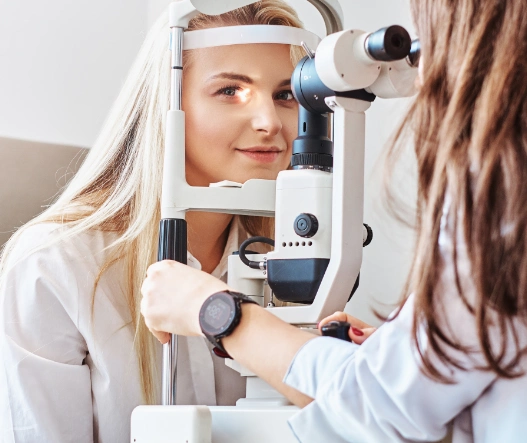
An EVO ICL recovery plan should cover more than when you hope to see clearly. It should explain how you will get home, who will check your eyes, when you can resume your specific work and which symptoms require a call. Those details matter whether your routine centers on Manhattan, Brooklyn or Queens.
How long does EVO ICL recovery take?
Many patients notice improvement within the first day or two, but early improvement does not mean the eye is fully healed. Vision may fluctuate while recovery continues over the following weeks, and some adaptation can take longer. Driving, work, exercise and water exposure should resume according to your surgeon’s instructions and examination findings, rather than a fixed online timetable.

Think in checkpoints, not a guaranteed recovery deadline
EVO ICL adds a lens inside the eye while preserving the natural lens. It is different from reshaping the cornea with LASIK. The manufacturer’s patient guidance describes outpatient treatment, transport home with another person and a follow-up commonly scheduled for the next day.
| Checkpoint | What to plan | What it does not establish |
|---|---|---|
| Procedure day | Arrange an escort, a ride home and a quiet recovery period. | Feeling comfortable does not mean you can drive. |
| Early postoperative visit | Keep the appointment and bring your drops and questions. | Good vision does not replace a pressure and healing check. |
| First week | Follow the drop plan and obtain specific activity instructions. | Returning to desk work does not mean every sport is cleared. |
| Following weeks | Report persistent or changing symptoms and attend reviews. | A calendar date alone does not establish stable vision. |
| Long-term care | Continue regular eye examinations after recovery. | An implant does not remove the need for ongoing eye care. |
The Refractive Surgery Council’s recovery guide distinguishes a quick return to some routine activities from a longer healing and stabilization period. Your own instructions may differ because of your examination, treatment and healing response.
When can you drive or travel around New York?
Do not drive yourself home on procedure day. Arrange transportation for the early follow-up as well, and ask when the surgeon expects to assess driving readiness. Being able to read a phone or see across a room is not a driving test.
A daytime trip and a nighttime drive between boroughs can place different demands on vision. Tell the team if your job involves driving, operating machinery or working after dark. Ask specifically about glare, halos and safe return to those duties.
If you normally travel by subway, bus or rideshare, confirm the escort requirements. A rideshare booking alone may not satisfy a requirement for a responsible adult. Leave room in your schedule for the visit rather than promising to be back at work immediately afterward. This is practical planning, not a statement about a particular office’s discharge policy.
Returning to work, screens and exercise
Ask for advice based on your actual tasks. An office worker using a laptop, a chef working near heat and steam, and a contractor exposed to dust need different conversations. Describe the environment, lifting requirements, protective equipment and commute before selecting a procedure date.
For screen-based work, consider a gradual return, larger text and breaks if your eyes feel tired. Do not force long sessions to meet an online recovery promise. Request written guidance for strenuous exercise, swimming, eye makeup and activities that could lead to an eye injury; wait for clearance where instructed.
Make the aftercare plan easy to follow
Keep the written drop schedule somewhere visible and set reminders if helpful. Wash your hands before using drops. Follow the prescribed medication and protective-shield instructions, avoid rubbing the eyes, and ask the team what to do if a dose is missed. Do not change or stop a prescribed treatment on the basis of a blog post.
The FDA’s general phakic-lens aftercare guidance emphasizes attending follow-ups even when recovery seems to be going well. Some problems require an examination to detect. Its overview covers several lens types; your EVO-specific instructions take precedence over generic details.
Which symptoms need a prompt call?
Contact your surgeon promptly for severe or worsening eye pain, worsening vision or symptoms that are getting worse rather than improving. New flashes, a sudden increase in floaters, a dark curtain or a missing part of the visual field need urgent eye care. Do not wait for the next routine review to report them.
Before treatment, save the practice’s postoperative contact instructions and ask how urgent concerns are handled outside regular hours. If you cannot reach the surgical team and have a sudden or severe problem, seek urgent medical care. Do not drive yourself with impaired vision.
Questions to bring to your preoperative visit
- What time and where is my first postoperative check?
- Who needs to accompany me, and for which visits?
- What exactly would clear me to drive, work and exercise?
- What should I do if my vision changes between visits?
- How will eye pressure, implant position and long-term eye health be monitored?
Still comparing procedures? Our LASIK recovery guide and PRK recovery guide explain why the recovery plan should match the operation you actually have.
Frequently asked questions
Can I drive the day after EVO ICL?
Only after your surgeon clears you and you can drive safely. Do not assume next-day permission; arrange a ride to the early follow-up.
Can I return to work after one or two days?
Some people return to routine activities quickly, but your work environment and healing matter. Get guidance for your job rather than relying on a fixed deadline.
Is blurry vision always normal during recovery?
Some early fluctuation can occur, but worsening vision or significant pain should be reported promptly. An online description cannot distinguish healing from a complication.
Do I still need eye exams after the implant heals?
Yes. Regular follow-up remains important for eye pressure, corneal health, the natural lens and other parts of the eye.
Plan your evaluation and recovery together
Discuss EVO ICL candidacy and aftercare with NY LASIK. Bring your work schedule, transportation needs and questions so you understand the plan before choosing treatment.

About Dr. Leonard Bley
Leonard Bley, MD, FACS is the founder and surgical director of NY LASIK’s Laser & Microsurgery Institute. His practice provides refractive and cataract care in New York City.
Sources and further reading
- STAAR: EVO ICL patient FAQ
- Refractive Surgery Council: ICL recovery
- FDA: Before, during and after phakic lens surgery
- NEI: Retinal detachment
General patient education. Your examination and treating clinician’s instructions determine the appropriate treatment and recovery plan.