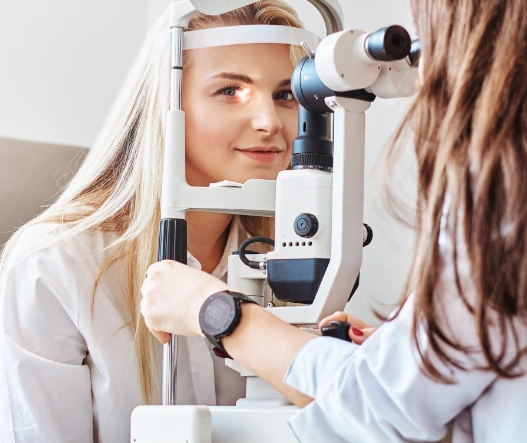
A useful LASIK consultation should leave you with more than a yes-or-no answer. You should understand what your measurements mean, which treatment options fit your eyes and what to plan before making a decision.
What happens at a LASIK consultation?
A LASIK consultation includes a review of your prescription, medical history and vision goals, an eye examination and measurements of the cornea. Your surgeon evaluates treatment suitability, explains the benefits and risks, and discusses alternatives. Bring your glasses, prescription records, medication list and questions—and confirm contact lens instructions before the visit.

How to prepare for your LASIK consultation
1. Confirm your contact lens break first
Contact lenses can temporarily affect the shape of your cornea. If measurements are taken before that effect settles, treatment planning may be less reliable. Tell the office your lens type, how often you wear it and whether you sleep in it.
| Lens type | FDA general guidance before baseline evaluation |
|---|---|
| Soft contact lenses | Stop wearing them two weeks before the baseline evaluation. |
| Toric soft or rigid gas-permeable lenses | Stop wearing them at least three weeks beforehand. |
| Hard contact lenses | Stop wearing them at least four weeks beforehand. |
These are general patient instructions from the FDA, not a substitute for your surgeon’s schedule. Your lens history may require a longer break or repeat measurements. Ask specifically about specialty lenses, including orthokeratology lenses.
2. Bring a simple preparation checklist
- Your current glasses and earlier prescriptions: dated records help the team assess whether your vision has been changing.
- Your contact lens details: include the brand, type and date you last wore them.
- A medication and health list: include eye drops, supplements, allergies, previous eye procedures and relevant medical conditions. Do not stop prescribed medication unless your treating clinician instructs you to.
- Your vision priorities: note your screen distance, night driving, sports and whether reading glasses are already part of your routine.
- Your scheduling questions: consider work, childcare, transportation and the follow-up visits you could attend.
3. Tell the team about symptoms and changes
Bring up dry eye, fluctuating vision, glare and contact lens discomfort, even if they seem minor. Also disclose pregnancy or breastfeeding and recent prescription changes. These details can affect the timing or suitability of treatment. The FDA’s LASIK candidacy guidance explains why a prescription alone cannot establish eligibility.
What eye tests help determine whether LASIK is right for you?
The exact examination depends on your history and the surgeon’s findings. Ask the team to explain how each result contributes to the recommendation.
| Assessment | What it helps answer |
|---|---|
| Prescription and vision testing | How much correction do you need, and is your prescription stable? |
| Corneal shape mapping | Is the cornea regular, or are there features that call for additional evaluation? |
| Corneal thickness measurements | Is there sufficient tissue for the proposed treatment plan? |
| Tear film and eye-surface examination | Could dryness or surface disease affect measurements, comfort or recovery? |
| Eye-health examination | Are there lens, retinal or other findings that could affect the decision or expectations? |
Read our LASIK candidacy guide for a fuller explanation of eligibility. If detailed corneal mapping is part of the recommendation, ask how it relates to Contoura Vision topography-guided LASIK. A particular technology is useful only when it is appropriate for your eyes.
Seven questions to ask before choosing LASIK
- What makes me a suitable candidate? Ask which findings support the recommendation and which deserve caution.
- Why this procedure? Ask how LASIK compares with PRK, EVO ICL or continuing with glasses for your specific situation.
- What might I still need glasses for? Discuss near vision, age-related reading changes and your most demanding tasks.
- What risks matter most for my eyes? Review dry eye, glare, halos, undercorrection or overcorrection, and the possibility of serious complications or loss of vision. No specific outcome is guaranteed.
- Who provides my follow-up care? Confirm planned visits and how to reach the practice with an urgent concern.
- What is included in the written estimate? Clarify whether the quote is per eye or for both eyes, and ask about testing, medications, follow-up care and any enhancement policy.
- What recovery plans should I make? Ask about work, driving, exercise and travel before selecting a date.
Use the FDA’s LASIK checklist alongside these questions. Our guides to LASIK risks and side effects and the LASIK recovery timeline can help you prepare a more focused discussion.
What should you leave the consultation knowing?
You should understand the proposed procedure, the reasoning behind it and any next step needed before a final decision. Sometimes that means addressing dry eye or allowing more time out of contacts before repeating measurements. An evaluation can also show that surgery is not the best option.
Ask for a written cost estimate and preparation instructions. Take time to review them. A consultation is an opportunity to make an informed choice; it does not obligate you to schedule surgery.
Plan your visit in Manhattan, Brooklyn or Queens
NY LASIK has offices in Manhattan, Brooklyn and Queens. When requesting a consultation, confirm the location for your particular examination and how much time to allow. Do not assume that testing, treatment and every follow-up will take place at the same office.
Ask whether dilation is planned and whether you should arrange a ride. Temporary blur or light sensitivity can affect your return trip. For a workday appointment, leave room for the examination and travel instead of scheduling an immediate return to driving or a visually demanding task.
LASIK consultation questions, answered
What happens at a LASIK consultation?
A LASIK consultation combines a discussion of your goals and medical history with an eye examination and measurements. The surgeon considers prescription stability, corneal shape and thickness, the eye surface and overall eye health before explaining whether LASIK or another approach may be appropriate.
Can I wear contact lenses before my LASIK consultation?
Contact lenses can temporarily change corneal shape. Ask the office for a lens-specific break before your baseline measurements. FDA general guidance suggests two weeks for soft lenses, at least three weeks for toric soft or rigid gas-permeable lenses, and at least four weeks for hard lenses. Your surgeon may require a different or longer interval.
Can I drive home after a LASIK consultation?
Ask whether your appointment will include dilation and whether you should arrange a ride. Dilation may temporarily blur vision and increase light sensitivity. Do not assume that you will be able to drive safely after the examination.
Does a LASIK consultation commit me to surgery?
No. A consultation helps you understand your options, suitability, costs and recovery needs. You should have time to ask questions and review the proposed plan before deciding whether to proceed.
What if I do not qualify for LASIK?
Depending on the reason, your surgeon may discuss treating an eye-surface problem first, repeating measurements, or considering PRK, EVO ICL or another approach. An alternative procedure has its own eligibility requirements and risks; sometimes glasses or contact lenses remain the better choice.
Where can I request a LASIK consultation in NYC?
NY LASIK has offices in Manhattan, Brooklyn and Queens. Use the appointment request form or call 888-NY-LASIK to confirm the appropriate location, appointment availability, fees and preparation instructions.
Start with an evaluation of your eyes
Request a LASIK consultation with NY LASIK. Our team can help you confirm the office, preparation instructions and appointment details.
Prefer to call? 888-NY-LASIK

About Dr. Leonard Bley
Leonard Bley, MD, FACS is the founder and surgical director of NY LASIK’s Laser & Microsurgery Institute. His practice provides refractive and cataract care in New York City.
Patient education sources
- FDA: Before, during and after LASIK
- FDA: LASIK candidacy considerations
- FDA: Risks and choosing a surgeon
- FDA: LASIK surgery checklist
This article provides general patient education. Your examination and personalized instructions determine the appropriate care for your eyes.